



Are you a collector, gallery owner, auction house, or expert?
Find here the catalogues raisonnés published online via InventoZen, with their authentication forms.
Authenticate an artwork in a few clicks and receive a response directly from the author of the catalogue raisonné.
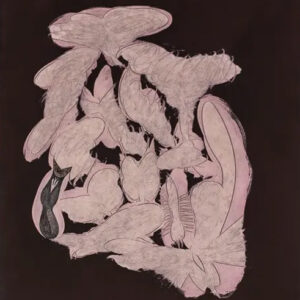
Jef Banc
Master of black and white, Jef Banc has spent 70 years exploring universal harmony through geometric and spiritual works. A true alchemist, he transforms ancient materials into symbolic abstractions where technical precision meets the mysteries of life.
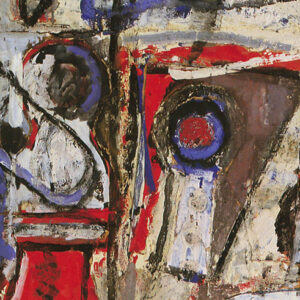
Albert Bitran
Major postwar painter and sculptor associated with lyrical abstraction, Albert Bitran merges geometric rigor with a refined sensitivity to color. His work acts as a cultural bridge between his Eastern roots and Northern Europe, reconciling Mediterranean light with a demanding formal structure.
Michel Constant
Contemporary artist born in 1936, Michel Constant moves between lyrical abstraction and poetic figuration to capture pure emotion. His work, centered on matter, light, and movement, is defined as a quest for the essential, stripped of all superfluous detail.
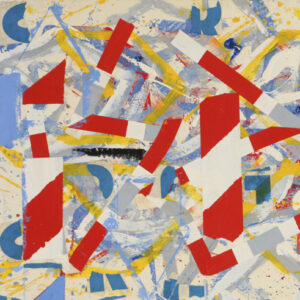
Simon de Cardaillac
Close to the postwar artistic elite, Simon de Cardaillac built, away from commercial circuits, a free and humanist body of work. Blending lyrical abstraction, raw materials, and urban signage, this “visual poet” transformed everyday life into a critical and existential reflection on society.
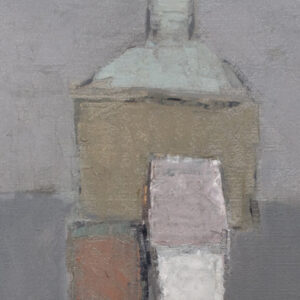
Sergio de Castro
Major artist of the second half of the 20th century, Sergio de Castro brings together Latin American and European cultures to create his own unique artistic language.
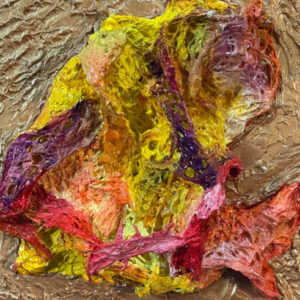
Crann Piorr’Art
Crann Piorr’Art is an abstract painter whose artistic approach blends painting, textile art, and sculpture to create vibrant and immersive works. His creations are distinguished by the use of vivid and contrasting colors—particularly deep blues—aimed at conveying positive energy and a joy for life.
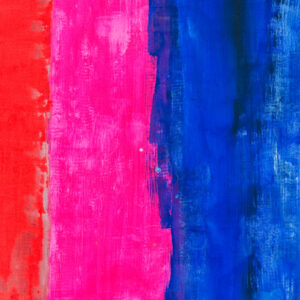
Loïs Frederick
A woman artist in the vibrant atmosphere of postwar Paris. Of American origin, she developed over the years a powerful and colorful abstraction, balancing strength and poetry.
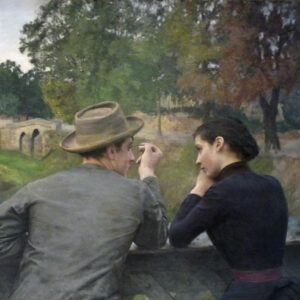
Émile Friant
An exceptional painter from Lorraine, Émile Friant moved away from academicism toward a naturalistic approach combining Flemish meticulousness with a mastery of light. Propelled onto the international stage by his masterpiece All Saints’ Day, this versatile and influential artist left his mark on the art of his time through the precision of his portraits, his genre scenes, and his engravings.
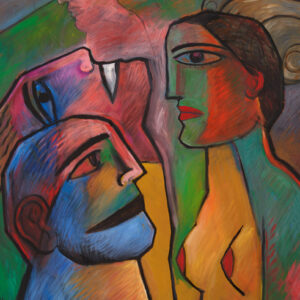
Giovanni Giannini
An artist of obsessions, Giovanni Giannini made painting his language to explore dreams and traumas. Through a wide range of techniques, he created a highly symbolic universe in which landscapes and figures express, between humor and gravity, his deepest emotions.
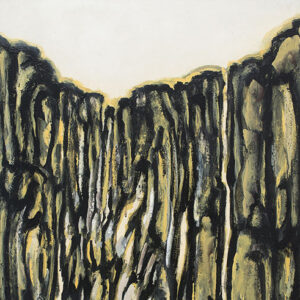
Robert Helman
A major figure of the New School of Paris, Robert Helman built a lyrical and independent body of work, driven by vigorous gestural expression and a vibrant palette. Unconcerned with trends, he created a unique telluric universe, fusing his inner truth with the vital force of Nature.
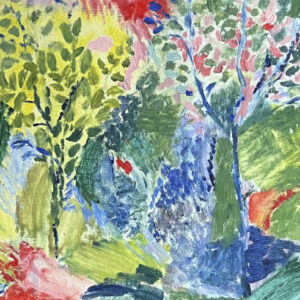
Irène Karlsson Ullberg
Swedish artist influenced by Monet and Chagall, Irène K:son Ullberg developed a body of work combining realism and poetry. Renowned for her use of color and the musicality of her compositions, she focused on magnifying the beauty of nature through oil and watercolor, capturing both landscapes and human stories between Scandinavia and the Mediterranean.
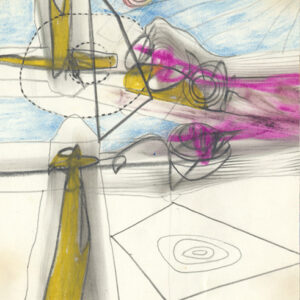
Roberto Matta
Roberto Matta was an artist who worked equally with painting, writing, and sculpture in order to provide the world with tools for greater realities. Identified by André Breton as the most profound painter of his generation, he became one of the essential figures of the Surrealist movement.

Raymond Metti Weirig
Rejecting appearances, Raymond Metti Weirig isolates his figures in shelter-like cases, protecting them from a dreamlike external world marked by time. Through a silent, feminine universe, this committed painter captures the moment of waiting as a way to defy time, celebrating fragility and life in a harmony of forms and colors.
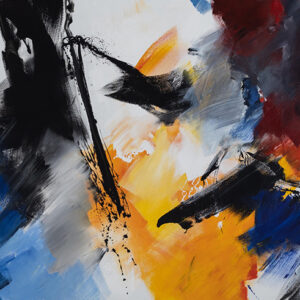
Jean Miotte
French painter at the crossroads of Art Informel and lyrical abstraction, Jean Miotte developed a unique abstract style. His work is primarily distinguished by a constant exploration of the representation of movement and the energy of gesture.
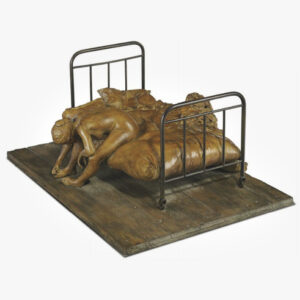
Darío Morales
A major figure of Colombian realism, Darío Morales magnified the human figure through a theatrical and poetic approach to painting. Blending classical influences with everyday scenes, he privileged emotion and intimacy, often concealing faces to invite a sensory rather than analytical perception of his work.
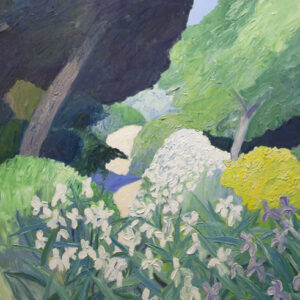
Roger Mühl
French painter associated with the School of Paris, Roger Mühl developed a modern figurative body of work celebrating nature. From Alsace to Provence, his oil paintings and lithographs are distinguished by a subtle layering of color, capturing a soft light and serene modernity through his landscapes and still lifes.
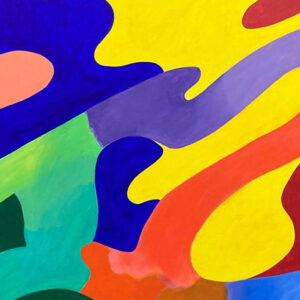
Guy de Rougemont
An unclassifiable multidisciplinary artist, Guy de Rougemont left behind a prolific body of work bringing together paintings, graphic works, furniture, objects, sculptures, and urban installations—products of growing popularity as his work has been discovered by new admirers.
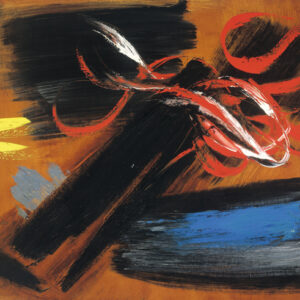
Gérard Schneider
Major figure of Lyrical Abstraction, Gérard Schneider is a central figure of this new free and gestural abstraction that emerged in Paris in the immediate postwar period.
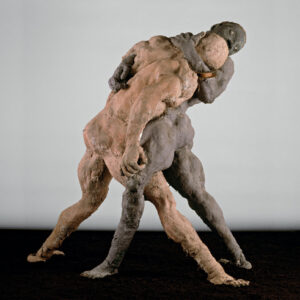
Ousmane Sow
Ousmane Sow shapes monumental figures in “macerated material” to celebrate the strength and dignity of humanity across the world. His sculptures, marked by a perfect mastery of anatomy, infuse movement and an almost organic vital force.
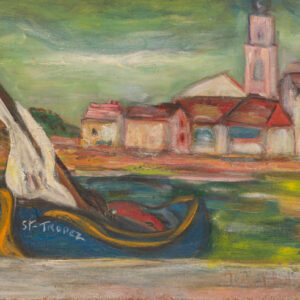
Tela Tchaï
An artist of the School of Paris of Romanian origin, Tela Tchaï develops a vibrant body of work between lyrical abstraction and poetic figuration. Her painting, marked by a free gestural approach and generous materiality, privileges pure emotion through a dynamic interplay of color, movement, and light.
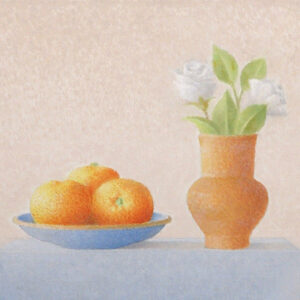
Xavier Valls
Catalan artist (1923–2006), Xavier Valls cultivated a timeless, solitary realism, untouched by passing trends. Portraits, still lifes, and landscapes from France, Spain, and Italy make up a body of work in which light and silence transform the familiar into pure emotion.
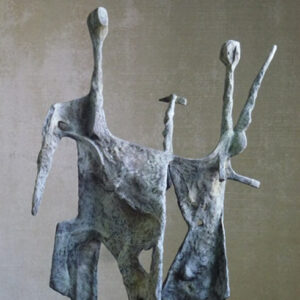
Marc Vellay
Humanist sculptor and modeller, Marc Vellay explores fullness and emptiness through bronze to question the archetypes of humanity. Blending everyday life with architectural reflection, his work—complemented by drawing and engraving—now features in international collections.
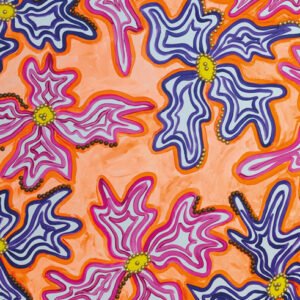
Noémie de Yturbe
An instinctive artist whose optimism is reflected in a free and spontaneous art, life is like a puzzle in which encounters, situations, and projects fit together harmoniously and move it forward.
Subscribe to the newsletter
To stay up to date with all our news and promotions.